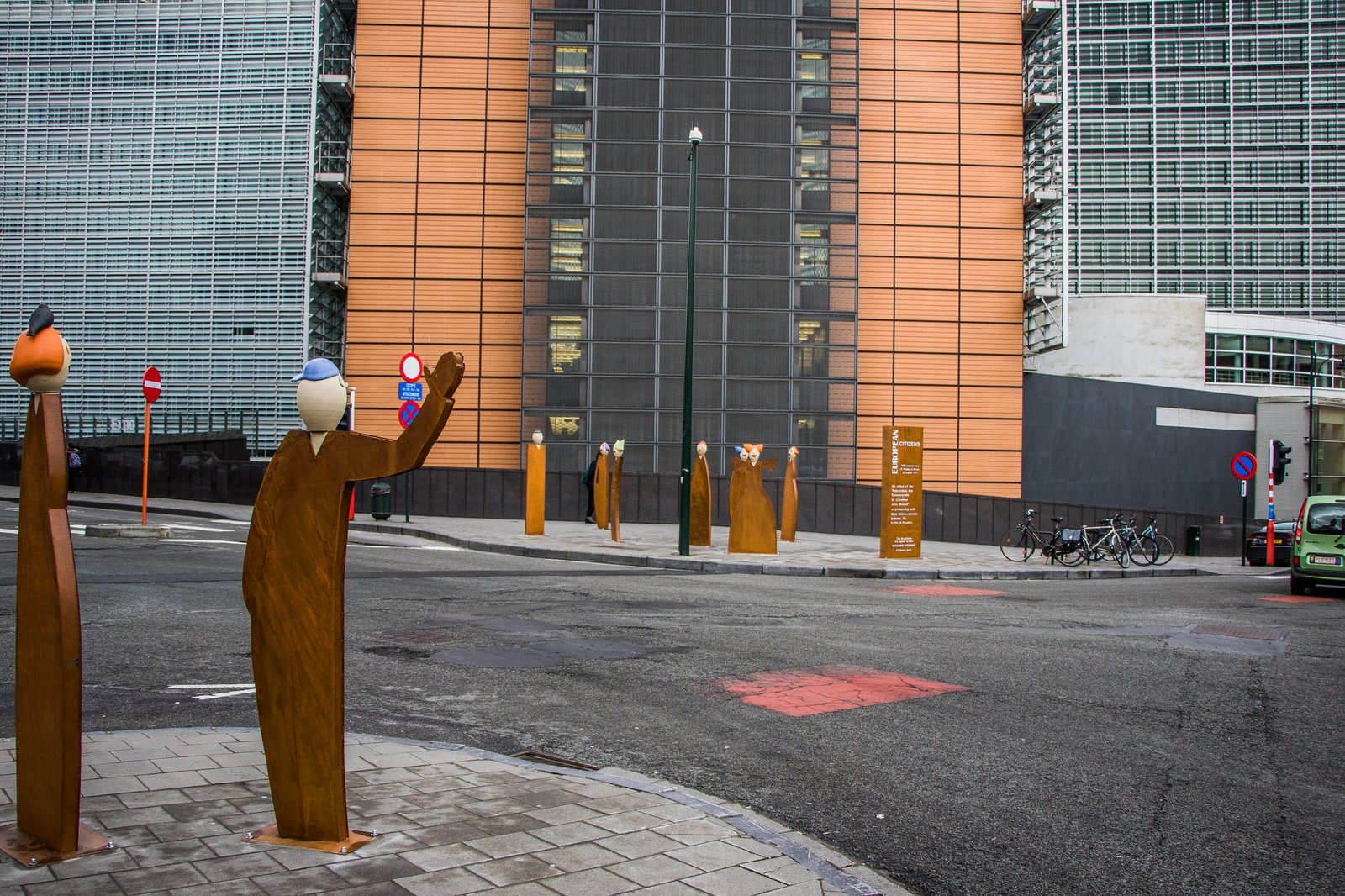
Tuesday, 8:30, October. The Brussels European quarter does its thing.
The pavements fill as they fill only here. Purposeful stride. Ambiguous nationality. A lanyard badge swinging with each step, like a small flag for a country nobody has yet founded. No single person gives away where they are from. However, look at all of them together and the location is unmistakable. This is the only neighbourhood in the world where this exact combination of people assembles every weekday morning, nine months of the year. Not coincidence. An institution.
Mornings in the Brussels European Quarter
There is a Luxembourgish sandwich shop on the route. The woman behind the counter sees a familiar face and says nothing. This is not unfriendliness — it is, in fact, something more considered. In the Brussels European quarter, recognition that requires no performance is one of the highest social registers available. The exchange is complete because it needs no words. Neither party has anything to prove. That, after twenty years at the same hour on the same route, is rather the point.
This is what the quarter does to a person, given time. You are never entirely of the place you are in — not the city, not the institution, not the nationality assembled around the conference table. You exist, always slightly, in transit. Between languages. Between registers. Between the person at home and the composite figure that appears at Rond-Point Schuman on a Tuesday morning in October.
Most people find this disorienting. After enough years, however, it becomes clarifying.
Identity is more portable than advertised. Because the quarter strips away the usual props — the native tongue, the familiar neighbourhood, the unearned confidence of belonging by birth — what remains is what a person actually is. Not what their passport suggests. That is, in the end, a more honest starting point than most people get.
The coffee arrives without being asked. Twenty years, after all, is long enough.