There is a particular kind of European book that teaches you how to look at things. Not what to think about them — how to look. Danube by Claudio Magris is the finest example of the genre, and if you have not read it, the gap is worth closing before your next journey through Central Europe.
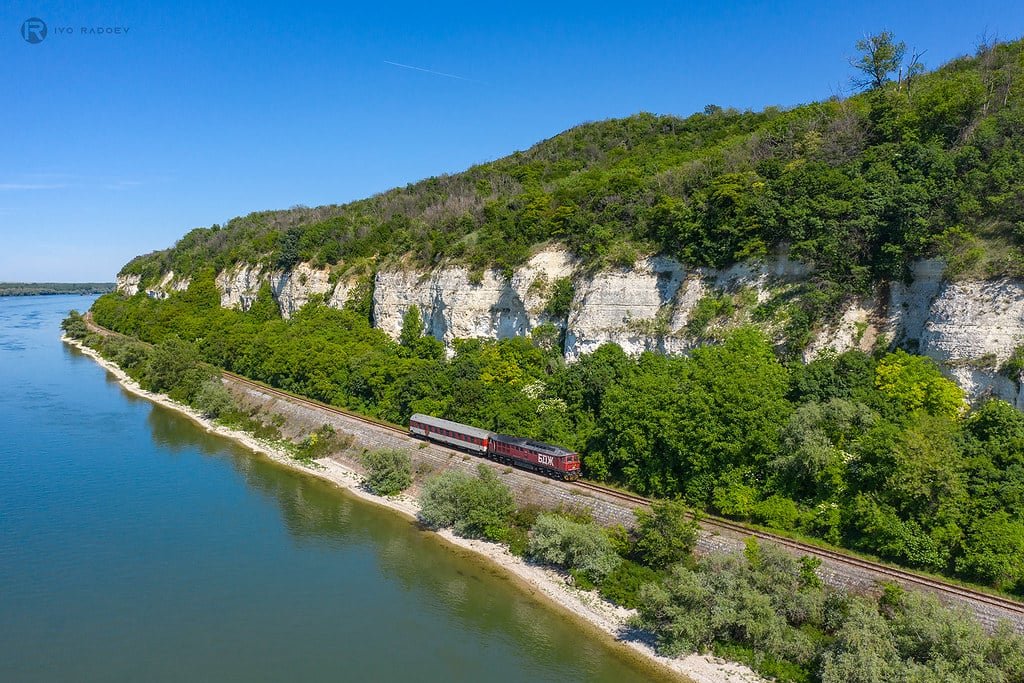
The book follows the Danube from its arguable source in the Black Forest to the Delta on the Romanian coast — 2,860 kilometres through ten countries, several defunct empires, and a civilisation that believed it was permanent and was not. Magris is Triestine, from a city that spent centuries at the intersection of everything. Because of this, he moves through Central Europe the way a person moves through their own house in the dark: by feel, without needing to turn on the lights.
The reason to read Danube is not the journey, however. It is what Magris does with the landscape: he reads it. A Habsburg customs house on the Slovak border becomes a meditation on bureaucracy as a form of civilisation. A vineyard near Dürnwald becomes an argument about memory and terroir that has nothing to do with wine and everything to do with how Central Europeans relate to what they have lost. An unremarkable town square in the middle of what was once Yugoslavia opens into a precise reckoning with how a continent holds its dead.
What Danube Is Actually Doing
The skill the book teaches is this: every European landscape is a palimpsest. Underneath the current surface — the motorway, the shopping centre, the restored Baroque façade — there is always another version, and usually several. The traveller who knows this sees twice as much. The traveller who does not misses almost everything.
The Reliable Experiment
Re-reading Danube at different ages produces different books. At thirty, it reads as a travel narrative. At forty, as history. At fifty, as something closer to a manual for paying attention. What it becomes after that remains an open question — and, in itself, a reason to keep going.
Find it at your nearest independent bookshop, or order through Bookshop.org, which routes the margin back to independent retailers across Europe. Either way, find it before your next train journey through Central Europe.
This is what The Considered Life pays attention to: not what Europeans consume, but why — and what the reason reveals about Europe.
For the same instinct applied to a city rather than a river, see Wrocław: the city that rebuilt itself.
Find your nearest river and walk an hour of it in the direction you have never gone. Notice what is built on its banks, and when. You do not need the Danube. Any river will do.