Living in Brussels is unlike living anywhere else in Europe.
Brussels is the only city in the world where this particular thing happens. On any given Tuesday, in any given meeting, in any given café queue, you can encounter five people from five different countries communicating in their third language. They are disagreeing about something that affects 450 million people. They are doing it with a degree of functional goodwill that would be completely unremarkable to everyone in the room.
This is not reported as remarkable because, to the people who live here, it is not. It is Tuesday.
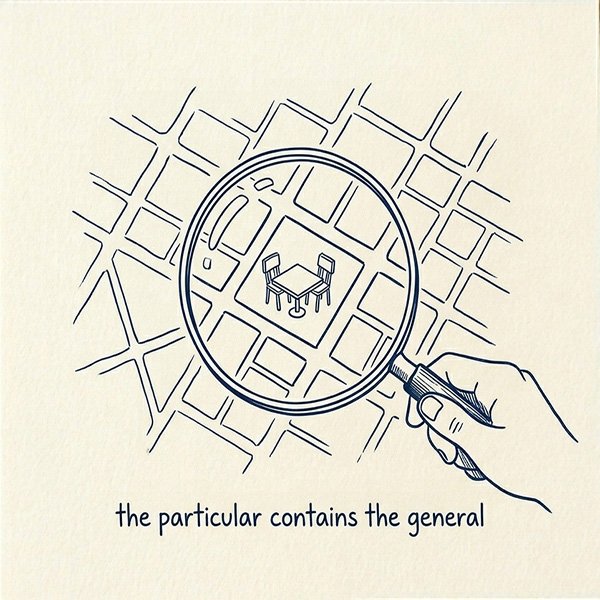
Field Notes from Brussels is the attempt to record this life before it stops feeling unremarkable — because the unremarkable is always where the truth is. A specific queue on a Saturday morning near the Commission. The particular atmosphere of a European institution cafeteria at 12:30 on a Tuesday in October. The moment in a meeting when you realise that nobody is from the same country, everybody is speaking their third language, and it is working. These are not metaphors for European integration. They are European integration — the version that exists in daily life rather than in white papers.
Many people have spent decades living in Brussels. Most of them are busy producing the Europe that exists on paper. Field Notes from Brussels is something different: the attempt to record the Europe that exists on a Tuesday afternoon, in a specific place, in a specific light, before it becomes too familiar to notice. The observations here are not the result of research or reporting. They are the result of deciding, a long time ago, that the small things are worth writing down — and then writing them down.
Each field note begins with something small — a conversation, a detail, a habit, a ritual — and follows it until it opens onto something true. About how Europeans actually relate to each other. About the gap between the Europe that exists on paper and the Europe that exists on a Friday afternoon. About what it means to build a shared project out of people who still, after all this time, find each other genuinely surprising.
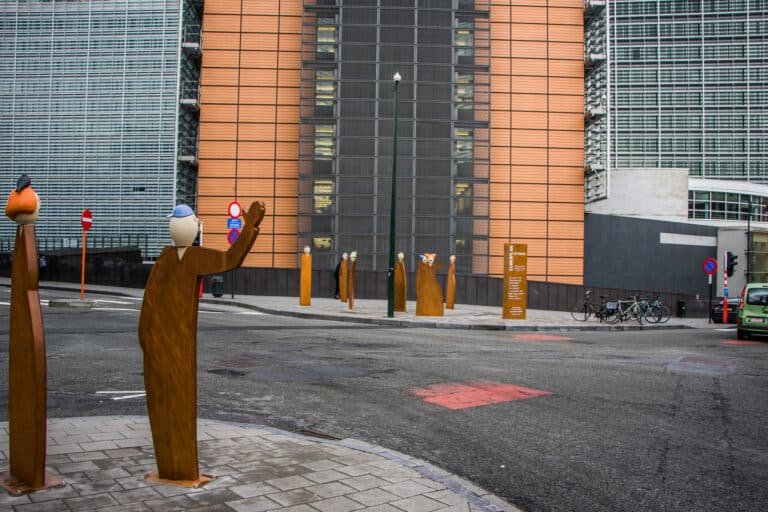
The field notes are rooted in specific places. The Quartier Européen — the grid of streets between Schuman and the Parc du Cinquantenaire where the institutions concentrate — is one of them. However, Brussels resists reduction to the European quarter. The Sablon on a Sunday morning. The covered market near the Gare du Midi. The stretch of the Rue de la Loi at seven o’clock on a Friday, when the civil servants have left and the neighbourhood briefly belongs to nobody. The café on the corner near the Berlaymont that has been there since before the Berlaymont was rebuilt and will, with some confidence, outlast the next institutional reorganisation.
Brussels is a city that has absorbed the project of European unification without being consumed by it. It remains, stubbornly, a Belgian city — Flemish and French in permanent, productive tension, municipal and peculiar, with the best chips in Europe and a relationship to rain that can only be described as resigned affection. The field notes move between the European layer and the Belgian one, because the truth is usually in the overlap.
Thirty years of field notes brussels produce a particular kind of knowledge. Not expertise — the institutions are full of experts. Something more like calibration. You develop an ear for the difference between the official position and the working assumption. You learn which meeting rooms in which buildings have the best acoustics for overhearing the real conversation. You learn that the most revealing thing about a European summit is not what appears in the communiqué but what gets said in the corridor at twenty past midnight by the people who will deny they said it.
You also learn — and this takes longer — that the project is more resilient than it looks from the outside and more fragile than it looks from the inside. Both things are true simultaneously. The field notes try to hold both.
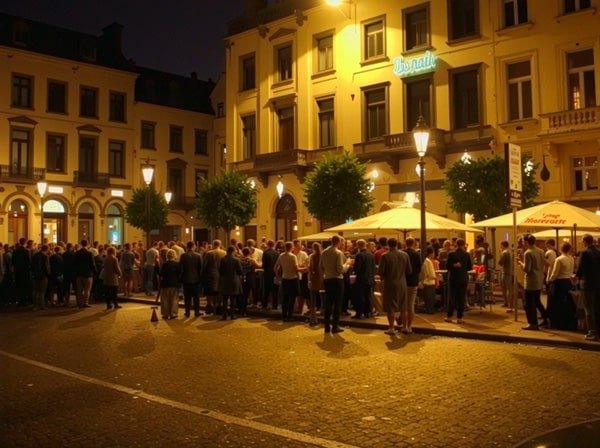
The Place du Luxembourg on a Friday evening is one entry point — the square where the European working week dissolves into something more honest.
Recognition That Requires No Performance is another — a Tuesday morning in the Quartier Européen that turns out to be about identity and what thirty years does to a person.
For the longer form — the essay that takes its time — the Thirty Years in Schuman series goes deeper into the same territory with more room to move.
These observations do not require prior familiarity with EU institutions. They require only a willingness to look carefully at the small things — which is, in any case, where the interesting ones are.
The European Commission publishes its own account of Brussels as a place to live and work in the EU. It is accurate, comprehensive, and almost entirely misses the point. That gap is where these field notes live.